
Context
The information below describes what this post is about
Overview
In this post I showcase a game development project which culminated in a prototype, overall demonstrating:
- My understanding of the concept of prototyping user/player interactions to explore problem spaces
- My ability to conceptualize, test, and iterate upon interactive systems
- My experience with utilizing tools and techniques related to the games and software development industries.
This project also demonstrates a bit of my ability to lead creative projects, but I don’t go into that too much for the sake of article length.
Project
This case study covers what the driving idea was behind this prototype, as well as a bit about our process for development.
Timeline
The project was completed in 2019 and took the team and I eight weeks to complete.
The Team
A team of 4 including, 2 engineers, 1 artist, and myself
The Tools
Unity3d, Photoshop, Trello, Github, GitBash, Discord, C#, Visual Studio
My Role
Game Director
Pioneered the game vision, mentored more junior teammates, facilitated meetings, tracked deliverables
Game Designer
Developed mechanics, designed 5 levels, conducted player testing, communicated and documented design opportunities and issues, found and fixed bugs

The Project
Below are details describing the process and key design explorations of the project.
Prototype
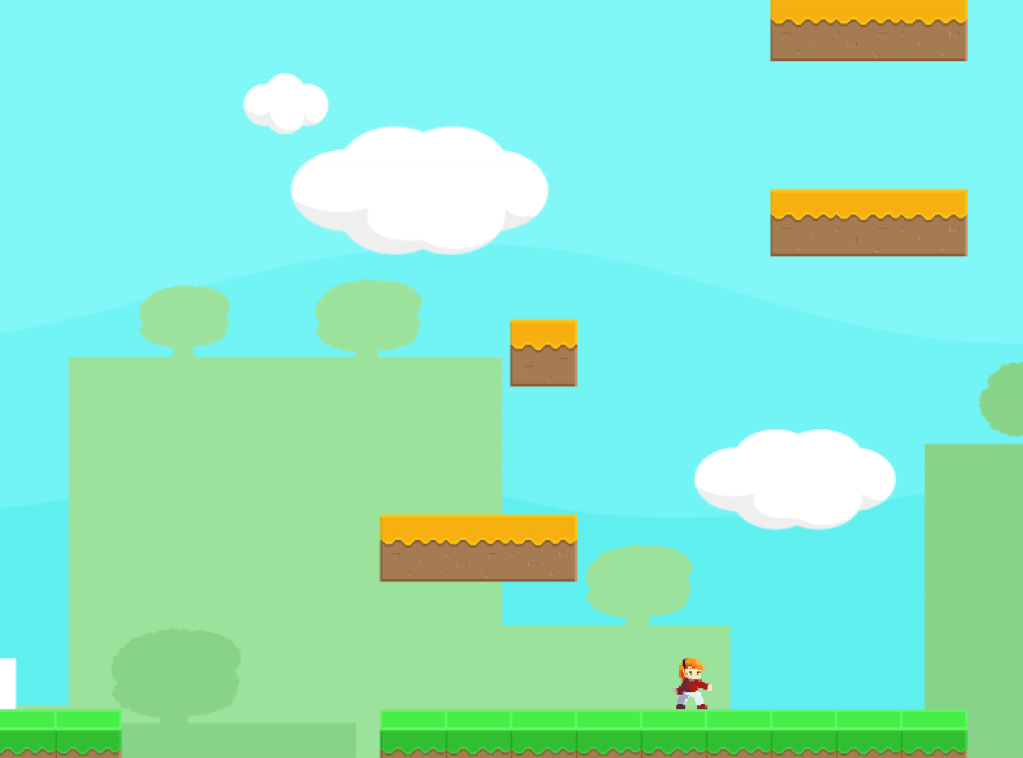
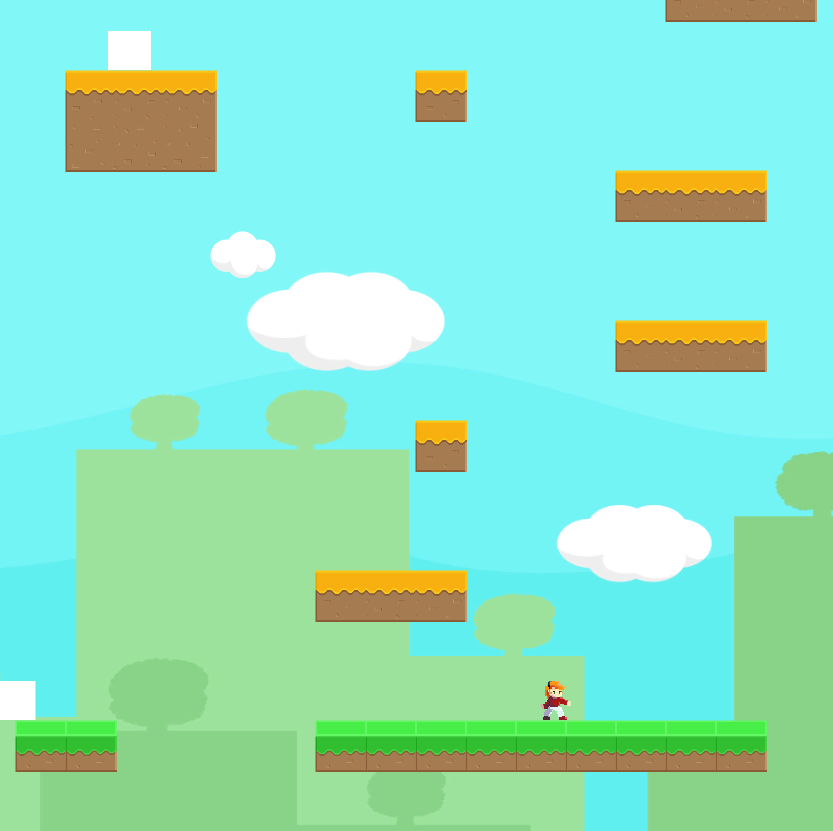
A prototype exploring the problem space of real-life rock climbing through the 2d Platformer medium. The player’s goal is to reach the level’s goal posts (white squares)
Key Explorations (features):
- Height/ fear of falling
- Lateral & horizontal reaching
- multi directions & challenge lvls
My approach to prototyping is that they must be cheap, fast, and provide the creator with a sense of the interactions that may be found in a system. They aim to answer questions like: is this working? Can I make this work? What is the current mental model of this system? Where’s the fun in this system?
Will Wright describes prototypes as foot soldiers that parachute into a problem space looking for challenges and interactions. That is how I see them as well, and so I led my team with this in mind. We used free art assets online, we did no animating, and we only built 5 levels. This allowed us to explore the concept quickly and for literally $0 cost.
Key Exploration 1: Fun with Heights
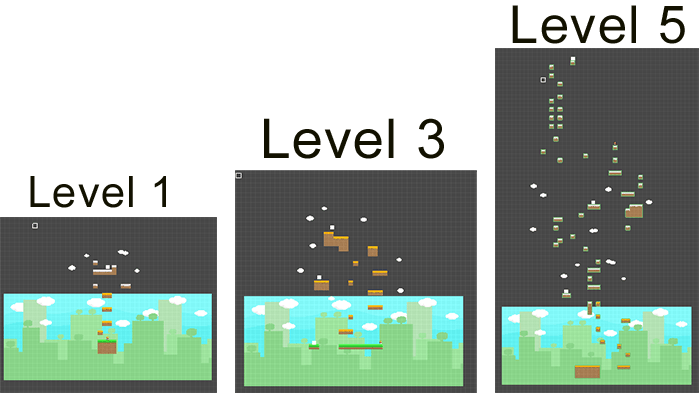
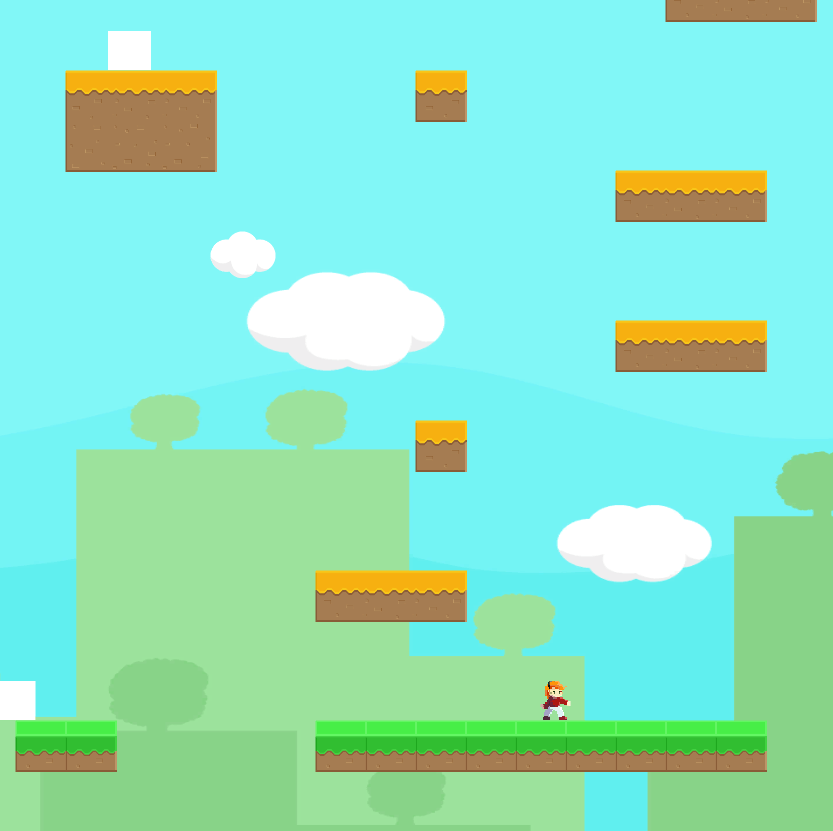
We explored establishing a sense of height by: making levels tall, making sight limited in any direction by tightening the camera, making the player small relative to their environment, and utilizing visual ques like clouds and color changes in the tiles.
We would have also liked to try: death on impact when impact occurs after falling for x amount of time, wind effects, exhaustion effects.
Key Exploration 2: Reach for your Life
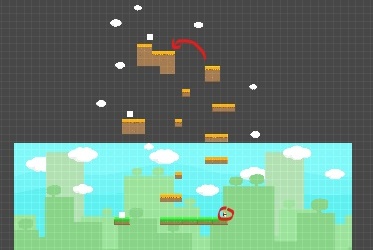
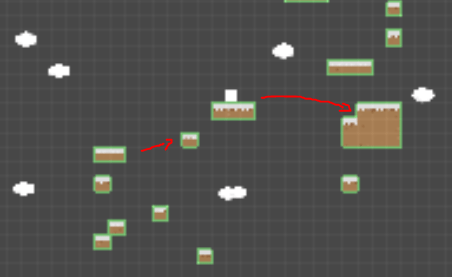
We explored making the player feel like they needed to reach for the next platform by: tightening the player controller (no slide, tight movement, slow travel speed), making jump height/length controlled by how long the player presses the jump button, placing platforms often at the max of possible travel.
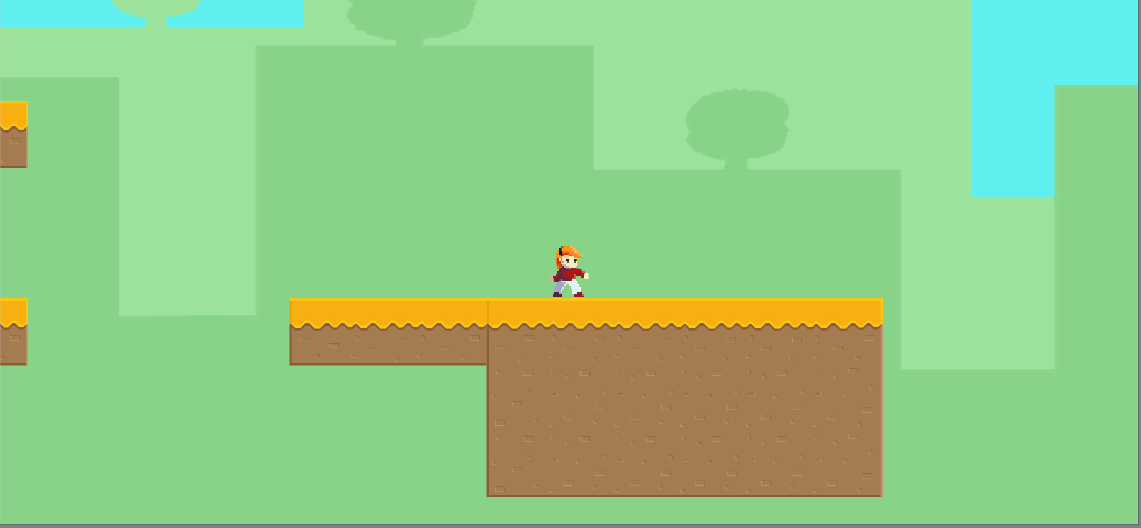
We faced a challenge when: while play testing, players were frustrated by the fact that if the player was at the very edge of a platform with one foot off, they would not be able to jump. This was a bug. I followed up on this after play-testing and found that our “ground-check” (the system that checks if the player is on the ground, turning jump off if the player is not touching the ground) was turning jump off if even 1 foot of the player-character was off the ground.
I showed my team during one of our meetings, and we were able to remedy the issue… partly. To alleviate it fully would have required some animation, which we agreed was not within the scope of our prototype.
In retrospect, I like the way we handled this. We were able to take player feedback and remedy what was broken while maintaining the project’s scope, allocating our resources to higher priority tasks.
Key Exploration 3: Choice
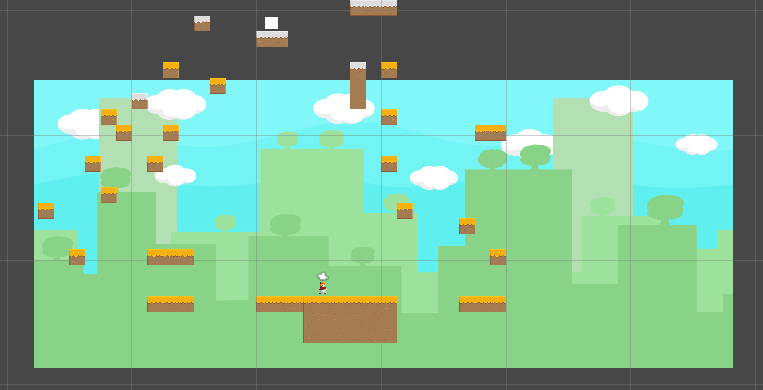
Choice (control, autonomy) is an important part of all interactive experiences. In Nielsen’s 10 Heuristics (#3: user control and freedom) and in all game design texts I have read, as well as in the classic line from Sid Meier who says games are a “series of interesting choices”.
In this game we linked the idea of choice back to the system at hand: Where is the choice in rock climbing and how do climbers control difficulty?
A) The climbers choice of location which comes with an inherent difficulty level.
B) The climbers choice of where to reach next; deciding which route to take.
A) Our simulation of location was not very in depth for this prototype. In the future, we can improve upon this via a game board or map that ties levels to specific locations whose difficulties are measured via ranks, and whose sounds and visuals are unique to location.
B) Our way of simulating this was through providing players with multiple routes to the goal post. This is something we really liked about the final prototype and agreed we would improve upon in a final product.
Final Thoughts
What is the future of this project? What am I proud of? What would I do differently?
The most important thing I took away from this project is something I initially had not heard discussed anywhere else, but had picked up on while studying and making games and interactive experiences professionally and in my free time.
When designing interactive experiences, it is helpful to refer to a real-life system in order ground the design in some sort of constraints. Designing a system with no initial foundation, constraint, or understanding of the general input-process-output (this is my favorite definition of a system ) schema is stupendously challenging. Even more so when you throw scope and resources into the mix. For beginners especially, I recommend finding a system that you find interesting and trying to translate it into a game.
This was my approach to this prototype, and I think it was a very successful exploration. I have a great start to what I am sure could be a fun experience for players. How am I sure? Because I have play tested it! The players enjoyed the experience of exploring the rock-climbing problem space within the 2d Platformer medium. If I decide to move this project forward into a shippable product, then I have a sense of where to start and where to go…
And that, is the point of a prototype. No?
 Arjuna Leri